Monday, May 13, 2013

"I don't need libraries so nobody else does" - All op-ed columnists


I just read another story about the irrelevance of public libraries by a privileged, white man who has never stepped foot in the library he is writing about. In this lame op-ed in the Huffington Post, Michael Rosemblum has decided to go ahead and describe the future of libraries by using himself as the sole example of people who use libraries: "Even though I lived right across the street from it for many years, I never went inside. I never sat in its reading room. I never checked out a book. I never explored its stacks to go through old volumes of bound periodicals in some research project." So that means that no one did, or at least no one worth mentioning.


These "libraries in crisis" articles are published every few months by all sorts of forward-thinking writers and are meant to make some sort of cultural commentary on the state of society. What these stories about the obsolete nature of libraries never do is take into account all of the people who are not like the author. These authors have decided that we all don't need libraries for the following reasons: The author can afford to pay for the internet and any media subscriptions he or she needs,  the author can afford to buy books, the author is employed, the author is literate and went to college, the author has access to cultural institutions, the author remembers when libraries had card catalogs and now they don't, the author may or may not have children but in any event kids use iPads, and of course Google.

All of these reasons are cited again and again across internet news outlets whenever a library near a writer's home is being built, remodeled, or changes in some way. And while all of these reasons for the unnecessary nature of libraries might add up for the author or people just like the author, for many people the library is something wholly different and completely necessary.  

For many people, the library is a lifeline to news and information, education, unemployment resources, government assistance programs, technology training, and career development. It is a place that parents can take their children (for free) that provides them with literacy programs taught by professional librarians, books, technology resources, and a safe space to learn and engage with others. It is a place for students to go for homework help and tutoring after school, and to hang out with friends off of the street. It is a place for anyone. And in New York City, where Rosenblum lives, there were over 16 million visits to the New York Public Library last year. Certainly there are people who can afford not to go to libraries. But for most people it is a place they cannot afford to be without. And in a democracy, we allow access to information and knowledge to all of our citizens.

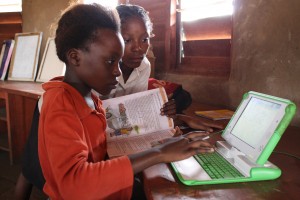
Kids on computers at a library, what?!

As for the argument that because of the internet we don't need libraries, it's the same as saying that because we can buy books we also don't need libraries. Just because the internet exists and we can get information faster than ever doesn't mean that everyone has access to this.Wireless internet connections are not currently free, computers are not currently free, and many reputable news sources and research databases are not currently free. And even when information is "free" we are still paying with our personal information. The library is one of the few places where people can truly find information for free because of the American Library Association's Electronic Computer Privacy Act which protects the privacy of personal records and internet search histories.

Then there's Rosenblum's argument that because libraries are no longer just about books they aren't really libraries anymore: "Library: a place for gathering people, giving people the opportunity to encounter each other....Well, there you have it. Another 3,000 year old institution killed by the web." I understand that change is difficult to adapt to. But to me, the fact that cities and towns across America are dedicating libraries as community spaces in addition to places that house books, technology, and other media, is really smart. Public libraries are for everyone, and by evolving libraries are reflecting more users' needs.

One of the biggest reasons for the idea that libraries aren't needed, aside from the fact that these writers are openly omitting any portion of the population that are unlike themselves, is that libraries are romanticized. Writers, who are ironically dealing with many of the same issues as libraries when it comes to content dissemination, like to remember a simpler time when libraries only served one purpose (which was never really the case). Categorizing public spaces makes it easier to think about complicated issues like access to technology, poverty and wage discrepancies, social factors and privilege. But to determine that rather than allow libraries to change based on the needs of many, they should instead not exist based on the nostalgic notions of a few, is a very narrow way to think about not only libraries but the world.  Libraries are changing and that's a good thing for everyone, even the people writing about how much they don't need them.

No one normal misses this.


Sunday, April 21, 2013

Reading between the lines

Maybe we don’t all judge books by their covers, but we do judge them by their dust covers where reviews are commonly printed. In the same way most of us would be reticent to try a restaurant without Yelp reviews, most of us would never dream of a foray into the unknown territory of a reviewless book. In fact, we probably wouldn’t even know most books existed if not for the reviews they receive upon publication, and for a lucky few, when they are chosen for national book clubs, like Oprah's. Reviews serve as not only a guide for readers, but also for book buyers and librarians to stock their shelves.  And those reviews can determine how a book is received, viewed, and read by audiences. But ultimately, how a book is reviewed (or not reviewed at all), carries a deeper meaning for readers who will judge and validate their own choices based on the opinions of very few at the top of the reading chain.


In the summer of 2010, authors Jodi Picoult and Jennifer Weiner took book reviewers to task for their seemingly unanimous praise of Jonathan Franzen’s Freedom.  Both writers who have been derided as “commercial” and “chick lit” authors, spoke against literary reviewers in the New York Times over book selections and critiques. Picoult tweeted “NYT raved about Franzen’s new book. Is anyone shocked? Would love to see the NYT rave about authors who aren’t white male literary darlings.”  While these claims are not completely supported (the New York Times has given credence to female authors in the past), there is cause for concern. 


Oprah loves Jonathan Franzen but he dissed the initial invitation to O's book club saying the he wanted to reach a male audience...


VIDA: Women in the Literary Arts created infographics depicting the number of women-authored books reviewed as compared to men’s and the numbers of reviewers by gender. The charts are striking. And so are the implications. If a book’s reviews measure its acceptability, then there is something wrong with a system in which on average, women represent less than 25% of the literary pool as both authors and reviewers. The New Republic highlighted similar results:

            “The numbers are startling. At Harper’s, there were 27 male book reviewers and six female; about 69 percent of the books reviewed were by male authors. At the London Review of Books, men wrote 78 percent of the reviews and 74 percent of the books reviewed. Men made up 84 percent of the reviewers for The New York Review of Books and authored 83 percent of the books reviewed. TNR, I’m sorry to say, did not  compare well: Of the 62 writers who wrote about books for us last year, only 13 (or 21   percent) were women. We reviewed a total of 64 books, nine of them by         women  (14.5    percent). “We know women write,” poet Amy King writes on the VIDA website. “We know women read. It’s time to begin asking why the 2010 numbers don’t reflect those facts with any equity.” – The New Republic


VIDA


Reviews drive the perception of a book, but what drives book reviews?  It is from four main sources that books are even considered for review in a prestigious publication like Harper’s or the New York Review of Books. Kirkus Reviews, Library Journal, and Booklist all drive mainstream book reviews through their summaries of titles. It is within these one paragraph descriptions of books that reviewers from mainstream sources take their cue.  These summaries also offer reviewers’ opinions about the books. And those opinions matter. A "starred"review in PW still increases a book'schance of getting media coverage and showing up in your neighborhood bookstore.  Unlike mainstream book reviewers, these reviewers are anonymous and sources from these publications say that they are academics, librarians, and subject specialists in the field. The subscriptions to these publications also cost much more than typical magazines that offer book reviews (between $100 and $450 per year). These anonymous reviews give popular reviewers a context with which to frame a book as it is being read. This influences ideas about genre, audience, and literary merit.

When it comes to mainstream book reviews - genre, authorship, and the reviewers themselves are elements that need to be taken into consideration.  In a heavily male-dominated arena that values “literary merit” over genre fiction (such as science fiction, romance, mysteries, etc.), reviews leave many books out of the running.  What we need to remember is that classic authors such as Raymond Chandler, Kurt Vonnegut, and Jane Austen were all considered genre writers at some point before becoming mainstream literary icons and that our biases towards genres are created by book reviews.  By not reviewing books that are considered genre pieces, especially novels about relationships authored by women that are often tossed into the romance pile, we as readers are missing out on plenty of books.


Saturday, April 6, 2013

Rehab Through Reading: The Power of Prison Libraries


"New York is shelving its prison law libraries," reported the Wall Street Journal this week as the New York Prison Commission is allowing county-run prisons to discontinue libraries.  Many don't consider prison libraries to be a necessity, and neither does the Supreme Court - in the 1990s the court ruled that prisoners do not have a "freestanding right to a law library."  And while this might sound like nothing for the general public to feel concern over, we should remember that prisoners are serving a penalty of time in a system meant to rehabilitate them and eventually release them back into society.  We should want the people who have served time in jail to be as fully capable to become law-abiding citizens as possible. Education is a powerful tool - it alleviates ignorance and opens up the mind. And in prisons, the only access to education is through libraries. There might be televisions, but there is no internet access and little contact with the outside. Books are the primary tools for self-education.

"Prison is a bare-bones world of isolation. Other than occasional calls home, letters and family visits, the prisoner is totally separated from the world outside the walls. There is little to distinguish one day from the next. World events become foreign and remote because the prisoner is so disconnected that prison itself becomes their world, their universe. There is little or no rehabilitation or education available to a prisoner. There are no incentives for bettering yourself. The prisoner is warehoused in a mind numbing world of sensory deprivation until his/her sentence is up, then cast back into society, often ill prepared." -Submitted by John Evans, Bostick State Prison, Georgia via Prison Book Program Blog.

Most prisons do have libraries, and besides legal materials, these libraries also stock fiction and non-fiction books, including educational materials (such as how to obtain a GED), and these materials are usually donated from public libraries. Earlier this year in a class on collection development in libraries, employees of the Prison Library Project spoke about their experiences with books in libraries. Two of the members had been incarcerated and described reading as a means of education, connection with others (through book clubs), and maintaining sanity while in prison. Their testimonies reminded me that prisoners are human. Learning and stimulation are human needs that books can meet.

Books are often used in juvenile detention centers to engage young people and hopefully transform their lives.  Books Beyond Bars is a project out of UCLA that donates books to a juvenile detention center and conducts weekly book discussions with the teenagers living there. While it might be more socially acceptable to rehabilitate children who have committed crimes through literature and education, the power to transform is not lost on adults.

Probably the most famous prisoner to ever turn his life around through reading is Malcom X.  But almost anyone who has ever read a great book knows the power of words to transport, engage, and shed light on dark corners of the psyche. If books can change people, they can certainly change prisoners. And those in government know this.  Public libraries receive funding because they are deemed important by taxpayers.  One City One Book programs have sprung up across the country because there is  power in literature that can bridge divides among people and communities. State-funded Early Literacy Task Forces are dedicated to ensuring all children's intellectual access to reading. We know that this is important. We know that reading changes lives. So why withhold this from prisoners?  If the goal of incarceration is to reacclimate prisoners to society, shouldn't we care that there are at least resources available to encourage learning and growth?

Aside from the fact that prisoners have rights to legal counsel, (whether that is accomplished through a library or not) when they are released the rest of society has a right to live among other law-abiding citizens. Producing better people from correctional facilities should be a priority so that cycles of crime and violence don't continue. I love books enough to believe that this is possible through reading and learning. And not just the classics - even completely meritless books by literary standards can offer people a glimpse into their own lives or a fantasy, can allow a reader to see patterns in typical story lines and characters, and can build confidence in the reader if perhaps she has not read a book in years. Reading changes people in one way or another. Words are powerful and they can set us free.


Free!
Four walls can never hold me in
They are physical, like bone and skin
The body trapped behind this wall
cannot contain my soul at all
Imagination sets me free
Beyond the fence that surrounds me.
No bricks can ever stop my mind.
No bars can keep my thoughts confined
I can go deep inside myself
Like a dusty book on a shelf
Another world exists inside
My heart is free – I am outside!

-Submitted by Michael E. Heller, Pinckneyville Correction Center, Illinois via Prison Book Program Blog


Monday, February 25, 2013

Pink-Collar Ghetto


Secretaries, customer service representatives and librarians all have one thing in common, all are pink collar jobs and all are part of a growing trend of “emotional labor” that is expected in the service industry.  That service sector jobs employ high numbers of women, and are usually unstable and offer low or no benefits is not a coincidence.  Historically women have worked outside of the home only to the begrudging collective approval of male breadwinners.  Service industry jobs were created for women and meant to exploit women’s natural aptitude towards service.  Not only are these jobs lower paying and less stable than many other industries, they are also more emotionally taxing.

Librarianship is no different.  While this profession requires an advanced degree in library science, it also requires service with a smile. By many professional standards the pay is quite low, with median wages for librarians at about $40,000 in 2009. Not by chance, this profession employs high numbers of women. As a graduate student in library and information studies, service is not merely taught so much as ingrained   This is a core competency of the profession, and one that I think is keeping librarians in bottom ranks of professional salaries and reputation.


While I believe that service should continue to be an integral part of the profession, we have to see beyond merely maintaining library user services and look for the value of librarians’ expertise in libraries. As information professionals we should be teaching and creating rather than simply responding to questions. It is in reference services (i.e. a person coming up to the desk and asking for something) that I think librarians set themselves up for an “affective labor” moment. In any other professional realm, a receptionist or assistant is the person sitting behind the desk or booth and responding to first-tier questions and inquiries.  Instead, in libraries the librarian herself is at the information desk. This means that we are not only answering in-depth reference questions, but also telling people where the bathroom is located.  It is a waste of the librarian’s education, skills and emotional output. It is one of the reasons we are regarded as clerks and filing secretaries.

Guidelines for librarians entail “Approachability, Interest, and Listening/Inquiring when providing reference service in a traditional in-person service setting.” We are asked to make ourselves approachable, friendly, and interested in the user’s needs.  And I think that we should be. But I also think that we need to look at other ways we can serve users outside of in-person question and answer sessions. Face-to-face service is important, yes, but there are many other aspects of the profession that require skills and education - such as developing collections of books and databases, creating online content and producing library programs. It is this lack of awareness that has relegated us to secretarial positions in the minds of the public.

As a pink-collar profession that serves the entire public (unlike nursing and teaching), librarianship is in a unique position to redefine the terms of “women’s work” and allow people to see that firsthand. And we can start by moving away from the reference desk and into creating more content. Almost all academic librarians are required to publish pieces in scholarly journals, and I think that this should be a cornerstone of the profession, along with teaching and creating user content for library websites. These skills and abilities are the means towards moving from unstable service positions to better paying jobs that are not constantly under threat of obsolescence by city and state governments. This is also a way to make the work that women do more impactful. Our work is not less valuable than that of other professions, but instead of service with a smile, we need service with a rationale. 

Friday, February 8, 2013

Legally Bound: Librarians and Publishers 4 Lyfe


A post in Gawker today cites a story about a librarian who disparaged an academic publisher in his personal blog and is now being sued for libel by the publisher, Edwin Mellen Press. Gawker makes light of the story - mainly over the idea that librarians are so boring that they are embarrassed to even be posting this story, and that publishers' law suits are so ridiculous it's funny, so that's why they posted it anyway.  While the latter may true in some instances - that this story was discredited due its lack of relevance to the rest of world is mistaken.

What goes on behind the polished wooden doors of academic libraries - namely freedom of access to information via publishers and book, journal, and database vendors - is important to the rest of the world.  Academic freedom and the freedom of information are paramount to the democratic privileges we all enjoy; and to libraries those things are paramount to the profession.

Just breathe. We still have freedom of information, kinda.

Publishers rely on reviews for their titles to be purchased.  It is the job of academic librarians to review the books and journals that they will add to their collection.  With deep budget cuts affecting almost all libraries and collection resources, what librarians decide to purchase matters.  So it is terrifying that when a qualified person shares an opinion about the content of the books produced by a publisher on a personal blog, he or she can be sued for it.  Universities pay librarians to make judgment calls on what books and materials are added to a collection.  It is the job of a librarian to determine if the works are truthful, scholarly, and support university courses.  If a book doesn't meet these requirements it won't be bought.  And if most of the books that fall into this dud category are from the same publisher, why not say so? This is what Dale Askey, a tenured librarian at Kansas State University in 2010, did on his personal blog.

To be sued for libel over stating an opinion about the content of publications is a scary prospect.  And while we can laugh this story off as a librarian getting sued for way too much money from a company way too large to seriously care about this - it has other implications for what we deem as freedoms of speech and intellect.  It also says a lot about the balance between large corporations and personal bloggers.  It is ok to unabashedly promote a product and not tell consumers that you are a spokesperson, but it is not ok to have a personal opinion that could sway consumers away from an inferior product.  What about Yelp reviews and scathing emails to companies from disgruntled customers that are published? Is this to become libel as well?  And what about Facebook's use of our "like" statuses to promote products that we have little or no knowledge of our complicity in.

Don't worry, Tina Fey will figure this scary publisher-bully thing out.

These issues do affect the rest of us.  Anyone with an online presence is subject to these same principles that the Edwin Mellen Press is setting forth.  Opinions matter and opinions need to be protected.  Libraries are the only federally sanctioned institutions to uphold freedom and access to information, and when that is threatened in a protected space it means something for the rest of us.

Tuesday, October 23, 2012

Librarians and cool things on the internet: A merger is possible


There are a lot of things that cool librarians do that make this job fun, viable, and relevant.  Most of those things have to do with using the internet in a way that educates users about all of the resources that libraries own and offer.  These librarians are tech savvy writers and information curators who have a strong social and digital media presence.  And they are the future of libraries.

Over the summer I interned for a public library and was able see firsthand that the culture of public libraries is so focused on in-person service (i.e. people walking in and asking for books or where the computers are) that they fail to see the entire audience of users who are at home on laptops, sitting in classes or meetings with tablets, or out shopping with smartphones.  These are the people that the library should be reaching - people who crave data and information that is useful, informative, and accessible.  These are people who care about their communities, and while they might not regularly visit their local library, they still support it.  And that's why a digital presence is so important.

Almost all libraries have an online catalog, but there needs to be more than just a website with a search bar that uses Google (which is pretty effective).  Instead, librarians should be using the digital tools that are all over the internet and creating interesting and usable information.  Librarians are smart, or at least they should be after earning a Master's degree, and that knowledge should be put to more use than telling people how to browse for Agatha Christie in the mysteries section.

Digital Resources Librarians, such as Nathan Masters, a staff writer at USC libraries and Kenn Bicknell, the author of the Primary Resources blog at the Metro Transportation Library (where I currently intern), are great examples of librarians who are taking information and making it usable, relevant, and interesting to a wider audience than only those people who use the physical space of the library.  These librarians are able to use their talents and skills to educate a community of online library consumers.  Through research and writing, these types of blogs and articles shed light on local history as well as on the resources that libraries and archives have to offer.  Not only are these fun posts to read, they are relevant and educational.


The future of libraries is in creative outlets for information.  Blogs serve this purpose, as well as other media sites like YouTube, Tiki-Toki, PeoplePlotr, History Pin and Flickr (I created the Tiki-Toki and PeoplePlotr pages for the Metro Library, they are still in progress).  As technology and media platforms change, so should the way libraries present information to the public.  The information and resources that libraries present to users can and should be more than a library catalog or monthly flyers about events.  I think that librarians will have to start looking for more creative ways to share information with users if they are to prove their relevance in a career that often seems less like an information profession and more like a personal directory service.

Sunday, September 9, 2012

Personality Plus


There’s more than one librarian who performs stand-up comedy (it’s me and one other person) but due to fear from the library she worked at over free press and library promotion, she was “let go”.  Libraries could use a little fun, and they could especially use some decent advertising.  Jobs are being cut, funding is being slashed and libraries are being accused of becoming obsolete.  So they should be taking what they can get in the realm of positive PR.  Instead, libraries insist on personality-less librarians whose anonymity is somehow connected with keeping library users’ information private.

One of the biggest downfalls of public librarians is in their staunch approach to remaining anonymous while providing very personal services to people.  From finding the next book to read, to looking up information on health issues and legal matters, the people who patronize the library often have to open up to a librarian about their personal lives in order to find the materials that they need.  From the point of view of a librarian, remaining anonymous keeps the library services consistent and keeps people who have personal questions from embarrassment.  Legally, every library user’s information is kept unidentified and their searching and borrowing histories are cleared systematically.  So there should be general concern for privacy, but does there really need to be anonymity on both sides of the reference desk?

Imagine your favorite coffee shop or bar, isn’t part of the appeal the people who work there?  And you probably have a favorite bartender or barista who you hope will be working when you stop in.  Personal relationships between people are important, especially at the places outside of our homes that we choose to spend time.  We want to feel welcome and comfortable.  Shouldn’t a library feel the same way?  We should be able to get know the librarians who help us find interesting things to read, who help us use databases and perform research, and who are behind the desk when we walk into the library. 

In all reality, librarians need to lighten up in order to shirk the image of the crusty, hermit crabby lady who sits behind a large stack of books muttering about the demise of the card catalog.  Libraries need to be more than books, information, and a physical building.  They need to be a place that people want to go, a place to spend time, a place with personality.  That’s what informs almost every decision we make about where we want to go outside of our homes.  There are enough painfully boring and inanely infuriating trips to public agencies that we have to make, the library is not and should not be one of them.  It’s a choice to patronize the library (that’s why we call people who use library services, patrons), and it should be a fun, inspirational, or at the very least - enjoyable experience.
 
Personality in government means a lot.  It means giving a face to a name, and it means making connections with people.  Librarians with personality give the entire library a better reputation.  Librarians who talk about the library outside of work are some of the best advertising the library has.  Libraries need people who are fun, outgoing, and engaging to greet and welcome people into the free public space that we all pay into.  What libraries don’t need are more rules, policies, and procedures that often boil down to fear of progression and change.  People need stimulation, knowledge, and human contact.  Libraries have those things, but people need to know that.  Personality is not just a plus, it is a must have for any business to survive.  Libraries that want to survive need this as well.

So let’s stop telling people what they can’t do in libraries, and let’s stop stifling librarians’ personalities and ideas.  Professionalism can encompass knowledge and respect while still allowing people to be people.  And that’s really all anyone wants.

Friday, August 17, 2012

The Modern Girl’s Feminist Primer: Getting Your Feet Wet


Here's another reason that librarians matter: Reader's Advisory Booklists.  Getting people to read is something that schools do, but getting people to love to read is what libraries do.  Genre Book Lists are created by librarians so that we can help people find stuff to read that they will really enjoy.  To do this, we research, read books, and read tons of reviews so that we are know the hard hitting authors and prolific titles for every genre.

This is my book/movie/blog list for anyone who's ever thought that feminism is passé, irrelevant, or hurting women and society.  It's none of those things, by the way, and here are some books, documentaries, and blogs to prove it.

The Modern Girl’s Feminist Primer:  Getting Your Feet Wet

Fiction: Just the Classics; Wit, Satire, and Farce: The Creepy World of Anti-Feminism What If’s; and Some Good Old Fashioned Love Triangles

The Marriage Plot by Jeffrey Eugenides (fiction, 2011).
This modern day Austenite romance follows a post collegiate love triangle in New England during the early 1980s.  Madeline, the central character has studied and completed a thesis on British romance literature of the 19th Century, while she is ironically living out the same basic plot of the works she has studied.  While she is a young intellectual, we see that Madeline is still bound by the societal standards that the heroines of Austen and Bronte are as well.  Written with heavy allusions and plot references to classic literature, this story draws parallels between the stifling gender-specific society of the 19th Century British upper class and the same upper middle class norms in America over a century later.

The Edible Woman by Margaret Atwood (fiction, 1969)
Margaret Atwood is known for making social commentary that is employed by ironic and science fiction elements in her novels.  In The Edible Woman, the story’s protagonist becomes unable to eat more and more types of food the closer she becomes to the feminine dream of marriage.  Through deep observations, peculiar characters, and bizarre events this novel leads the reader into a world that is at once realistic and fantastical. The absurdity of the plot elements, along with the deadpan narration of everyday (and not so everyday) occurrences will leave this story with the reader long after the book has been placed back on the shelf.

The Handmaid’s Tale by Margaret Atwood (fiction, 1985)
In this dystopian world, Atwood paints a picture of dark future for a society that began heavily restricting its citizens after a terrorist attack.  In the wake of these events, the government collapses and a conservative, extremist party comes into power. One of the cornerstones of this new regimes influence is in reverting men and women back to “traditional” gender roles, using men as studs and women as breeding machines.  This haunting and terrifying tale rings close to home as Atwood depicts a society not so different from our own.

Florence of Arabia by Christopher Buckley (fiction, 2004)
Unlikely feminist author, Christopher Buckley writes this satire in his definitive farcical style.  Using humor, pop culture and current events, Buckley tells the story of the Deputy to the Deputy Assistant Secretary of State for Near Eastern Affairs, Florence Farfaletti, as she becomes entrenched in a plot to grant asylum to one of the wives of a misogynistic Middle Eastern prince and begins promoting women’s rights in the midst of the chaos.  The fictionalized country of Wasabia represents the repressive Arab regimes that subvert women while the Western world looks on.  Seen through the eyes of the witty and strong-willed Florence, the story brings feminist issues in the Middle East home to America.  This book is a likely favorite for any fan of Janet Evanovich’s Stephanie Plum series, with the added elements of a cultural revolution that has become even more relevant with the rise of the Arab Spring.

The Witches of Eastwick by John Updike (fiction, 1984)
Told in Updike’s classic ironic prose, The Witches of Eastwick is a tongue-in-cheek examination of feminist stereotypes.  Strong, opinionated women who have traditionally been viewed as “ball-busting” and man-hating are the models for Updike’s female characters.  3 witches living in suburban Eastwick, Rhode Island routinely and nonchalantly cast spells on men that leave them shriveled shells of their former selves.  The idea that a woman can strip a man of his manhood purely by being a woman is attacked in this satire on societal typecasts of modern feminists.  The book spans commentary-making irony and blatantly offensive images of women that are not necessarily shrouded in the same allegory as the tale itself.  Updike has never openly admitted to writing this as a feminist work, however, the story is regarded by most women’s studies intellectuals and opinion makers as feminist.

The Stepford Wives by Ira Levin (fiction, 1972)
Ira Levin’s classic tale of warning is wrought with irony, metaphor, and extremism.  The idyllic town of Stepford is a gender-specific society’s dream come true.  The women happily fill their roles as ultra-feminine housewives, abuzz with the latest technological advances in kitchen appliances, while the men relish in masculine identifiers such as golf and lodge memberships.      Yet, just below the surface there is something amiss in Stepford, as Joanna Eberhart, a former career-woman who reluctantly arrives in Stepford with her husband and two children from the City, notices immediately.  As the steady ascent into housewifery takes a hold of Joanna it is clear that something bizarre and unworldly is happening in Stepford.  This classic novel has set the stage for questioning ideals of womanhood and “normalcy” in American families.

Non-Fiction:  It’s Just Like Reading a Magazine, Only Longer!

The Female Thing: Dirt, Sex, Envy, and Vulnerability by Laura Kipnis (nonfiction, 2006)
This witty and humorous take on the female psyche disguises intellectual quandaries as entertainment as Northwestern professor, Laura Kipnis takes readers on a journey through her mind, and the minds of all women.  Told through a series of stories and scenarios, The Female Thing makes light of the labels and objectifying thought patterns that men and women impart on other women.  From minor observations to sweeping stereotypes, Kipnis examines why women think what they think about their bodies and themselves in relation to other women.  For anyone who has ever been told that women are innately catty – here is a fresh look at how women are pitted against each other subliminally and blatantly.

A Strange Stirring: The Feminine Mystique and American Women at the Dawn of the 1960s by Stephanie Coontz (nonfiction, 2011).
For anyone who has ever wanted to read The Feminine Mystique only to find it blatantly prejudiced, outdated… and well, very long;  A Strange Stirring bridges the divide between white middle class feminism of the 1960s and post-modern feminism that supports varied sexualities, classes, and ethnicities.  Coontz takes a step back from Freidan’s myopic book, and depicts the state of feminism for women in various classes at the time of the Feminine Mystique’s publishing.  Through interviews with women who were in their 20s and 30s at the groundbreaking book’s release, to interviews with those women’s daughters, Coontz rounds out the story of feminism in the 1960s and makes it palatable for any reader today.  Written in a narrative, journalistic style, this book is understandable and relatable to readers who were young adults in the 1960s and those who are young adults today.

Full Frontal Feminism: A Young Woman’s Guide to Why Feminism Matters by Jessica Valenti (nonfiction, 2007)
The former editor of feministing.com and author of The Purity Myth, takes a stance on feminism as a young woman in a post-modern generation that has been deemed passive and apathetic by second wave feminist activists of the 1960s and 70s.  Here Valenti’s powerful prose, conversational tone, and outspoken observations about the banal sexism that most women encounter every day, offers readers a fresh perspective on feminism.  From why feminism matters, to what it means, to how apathy towards this movement hurts everyone in society, this book covers ground in understandable, relatable, and just plain funny chapters.  Valenti is the embodiment of modern feminism – at one point in her life she was reluctant to identify with the movement, yet she is now a powerful force in fighting for gender and sexual equality.  This book is for anyone who thinks that feminism is passé, or is curious about what it really means.

The Feminine Mistake by Leslie Bennetts  (nonfiction, 2007)
Don’t let the title of this book fool you, Bennetts is not necessarily saying that feminism has failed women, but that feminism has not given women a complete picture of what their lives would look like if they were fully dependent on husbands and men today.  Bennetts argues that feminism needs to do a better job of promoting women staying in the labor force and remaining economically independent despite becoming mothers.  This heavily researched book uses statistics, reporting, and social analysis to give readers a fuller picture of the economic impact of leaving the work force.  While feminism does not argue that anyone follow a strict procedural guide, Bennetts argues for the campaign that encourages women to remain in the workforce.  Written with journalistic quality, this book feels as though it spans many topics of a deeply engaging news article; human interest, economic, political and social.

Click: When We Knew We Were Feminists edited by Courtney E. Martin and J. Courtney Sullivan (nonfiction, 2010)
This is a compilation of “click” moments from feminist writers, thinkers, and activists who suddenly realized that they were, in fact, feminists.  Writers such as Jennifer Baumgardner and Jessica Valenti weigh in to describe the road towards feminism and the moment they knew that they had arrived.  This volume gives readers a great introduction to today’s feminist public figures.  Each essayist’s memoir offers a unique perspective on what feminism means today, how it shaped her, and how it can be lived.

Manifesta by Jennifer Baumgardner and Amy Richards (nonfiction, 2000)
In this look back at Riot Grrrl feminism, Manifesta asks “Is feminism dead?”  While the authors undoubtedly have a soft spot for the feminist movement that took place in the 1980s when they were coming of age, the book encourages the next generation of women to pick up where it left off.  Both authors share their personal histories as feminists and compare the old with the new.  While not overly researched, this book does compare third wave feminism with the latest wave and offers insight from the women who were there.  This book is for anyone who is thinking about feminist activism but doesn’t quite know where to start.

Note: Caitlin Moran's How to Be a Woman (2012) should also be in this category, but I haven't read it yet.  And these other books need some love too.

Authors:  Noteworthy for a Reason

Margaret Atwood (1939 - ) Atwood is known primarily for her work as novelist in cautionary tales of futuristic and modern societies.  While Atwood has stated that she does not feel she is a feminist author because she does not consistently write in that frame, scholars and feminists still regard her work as such.

Jessica Valenti (1978 - ) Valenti is a feminist author and speaker who edited feministing.com and has published 4 books and 1 documentary to date.  This outspoken feminist has made the movement accessible to Generation Xers and Millennials.  She is known for her hard-hitting, brash yet conversational writing style that has made her books bestsellers.

Jennifer Baumgartner (1970 - )

Creator of the I Had an Abortion Project and It was Rape Project, this activist and writer focuses on gender and sexuality politics.  Baumgartner started as an intern at Ms. Magazine and began writing independently soon after.

Movies:  What Netflix was Made For

Juno written by Diablo Cody, directed by Jason Reitman (2007)
This quirky comedy stars an unlikely protagonist - a pregnant high school student in a middle class neighborhood who resolutely decides to give her baby up for adoption.  Juno quickly realizes that being a pregnant teenager carries some hefty weight (societally speaking), and must overcome stereotypes and prejudices from the peers and adults in her life.  Yet, in her quest to find the perfect home for her unborn baby, while still maintaining her typical teenage life, Juno realizes that perfection is in the eye of the beholder.  The lyrical writing and atypical cast will keep audiences glued to the screen.

Bridesmaids written by Kristen Wiig, directed by Paul Feig (feature film, 2011)
Pre-wedding jitters ensue as Kristen Wiig’s single 30-something character learns that her best friend is engaged.  In this film about female friendship and all the relationships that surround it, we learn that love conquers all – even competition over a best friend.  This movie emphasizes female comedic roles and daring situational humor that is groundbreaking for this genre.  Often referred to as “The Hangover for women”, this film offers more depth and character development than The Hangover, adding to the comedic value.  This film is for anyone who just wants to laugh, for hours.

The Purity Myth: How America’s Obsession with Virginity is Hurting Young Women written by Jessica Valenti, directed by Jeremy Earp (documentary, 2010)
Based on the 2009 book, The Purity Myth by Jessica Valenti, this documentary takes a closer look at the purity myth that is perpetuated by conservative Christian groups and the media.  This film explores the powerful images and stories that are used to tell young women that their value lies in primarily in their virginity.  Narrated by the author, this documentary is a thought-provoking look at the dark side of white wedding ideal.  Fans of feministing.com, Valenti’s writing, especially The Purity Myth, will find this documentary engaging and necessary.

Miss Representation written and directed by Jennifer Siebel Newsom (2011)
The depiction of women in the media is often wrought with stereotypes about female personality and behavior.  In Siebel Newsome’s Miss Representation, she uses a series of interviews, media clips, and statistical analysis to debunk the myths perpetuated by today’s mass media about women.  This film is a great introduction to feminism, as it depicts the blatant sexism and gender stereotyping in the media that should not be ignored.  This accessible news-style feature first premiered on the OWN Network, and fans of Oprah will likely enjoy the format and subject-matter of this documentary.

Music: Show Tune-Free Zone

Frazey Ford
Frazey Ford is better known for her role as lead singer of The Be Good Tanyas, a folk-rock female group that hails from Canada.  On her solo album, Obadiah, Ford uses her bluesy twang to croon self-written lyrics that deal with mother-daughter relationships, drug use, and daily life.  Ford’s unique and haunting voice captivates listeners, while catchy rhythms do the rest.  Frazey is for anyone who has ever worshipped on the grounds of the Lilith Fair.

M.I.A.
 This Sri Lankan-born artist and activist uses the lyrics and sounds in her songs to make social commentary on issues that affect her war ravaged home country as well as democratic uprisings all over the world.  She is also known for her neon eclectic fashion choices and political engagement overseas.  M.I.A. raps, sings, and mixes sound to create music that is more than just catchy and upbeat.  Fans of Rhianna and indie pop rock, (who would also like to hear those things combined) will enjoy M.I.A.

Web: Maintaining Your Feminism on a Daily Basis

This website is the go-to for everything feminist (well, mostly anti-feminist) that is aggregated from the headlines.  Feminist author and social commentator, Jessica Valenti was a former editor here, and the legacy of journalism and activism lives on.  This is a great site for anyone who doesn’t know where to begin navigating the choppy waters of feminism and current events.  Let this be your life raft.

Jezebel.com
Jezebel.com follows the same format as Gawker and offers pithy headlines for all things feminist and celebrity in the news media.  This site has original content and columns that are both funny and newsworthy.  If humor, satire, and brash writing styles are your cup of tea (more like bottle of cheap beer with this crowd) then Jezebel will be your place in the golden, feminist sun.

HelloGiggles.com
For all things cute, girly, and social activist-y, check out HelloGiggles.com created by Zoe Deschanel and 2 of her best friends.  This site has something for everyone – crafts, nail polish ides, and cute food.  But it’s not all fluff, HelloGiggles posts original articles and interviews with women who are making a difference in their communities through social work, activism, or starting their own companies.  For fans of The New Girl… who are probably already on this site.

CalistaJones.com
This content-rich, intellectually written, meticulously researched, and very personal blog which profiles the lives of feminists today and in history, began as a women’s history writing idea.  Written by my best friend, Julia Olson, this blog now receives thousands of hits per day and outlines some of the most progressive and controversial ideas in modern feminism.  For anyone who has ever thought that they were too girly, fun, smart, ignorant, or cool to be a feminist, read this blog!  It’s basically for anyone who cares about people and what’s going on the world.


Wednesday, August 1, 2012

Sexy Old Librarians


Boring, old, visually impaired, socially inept bookworms usually turn into librarians.  So do sexy, vintage, cat-eye-glasses-wearing, brunettes (never blondes unless they are made out of plastic).  We either need to sex it up ourselves or people will do it for us in Photoshop.  American librarians have been plagued with image problems since the creation of public libraries in the nineteenth century.  Originally, librarianship was championed as an ideal profession for women by none other than the infamous Melvil Dewey (of the Dewey Decimal System that we've all come to not really know or love).


Dewey thought that women would be great for the job because, being women in the nineteenth century, they would put up with a lot more shit than men, plus they would love sitting for long periods of time using his racist cataloging system (there have been some improvements to this, but it's still pretty pro-Western, White, Christian). He was also known to fondle and grope his female students; so it's no wonder that maybe some of the backlash from this was that women wanted to be taken seriously and not seen as sex objects.

Dewey is a creep


It's also amazing that so many women were able to elicit change in a profession and society that were designed to "keep them out of trouble" (old Dewey again).  In 1893, less than twenty years after the founding of public libraries and  librarianship in America, the World’s Columbian Exposition was held in Chicago and featured a Women's Building that showcased a library of women's literature and  was staffed by female librarians (handpicked by Dewey - gross, but still cool that they were able to exhibit women's literary achievements and history at a time when this wasn't widely viewed as relevant).

By the 1920s female librarians were seen as progressive, and picked up steam again in the 1970s when civil rights movements had taken shape and equal opportunity employment and pay were at stake.  In 1969 a group of female librarians petitioned to form the Social Responsibilities Round Table Task Force (SRRT) on the Status of Women in Librarianship at the American Library Association.  These women were not taken seriously until a few years later, when they finally rounded up enough disenchanted female librarians who reported dissatisfaction and disgust with discrimination and sexism within the ALA and librarianship. 


Today, librarianship is not just for women (and hasn’t been since it began), although the stereotype persists.  Media outlets and pop culture in general continue to tout women librarians as either sexy or old (although Nancy Perl continues to be awesome despite what toy makers have deemed her action figure super powers to be).  While male librarians tend to be completely forgotten in general society (women still make up 82% of professional librarians).  There is one documented sexy old guy who was a librarian:  “Cassanova the famous 18th-century lothario ended his life as a librarian. Librarians could use that to sex up their image” (The Know-It-All).  See? That should make male librarians feel good about their own stereotypes.


So while the typecast persists, librarians press onward, bringing books, DVDs, and tattoos to the public every day (except Sundays at some libraries) for free. How’s that for sexy?

Tuesday, July 10, 2012

What to read when there’s nothing to read (and there's nothing to watch on TV)


On a recent trip to San Francisco, my boyfriend and I stopped into a well-known independent bookshop and asked for some book advice. I wanted to find a book for my mom, so I asked the book clerk what he could recommend as a good story that focused on relationships between a mothers and adult children. He told me that he didn’t have any ideas because he wouldn’t normally read anything of that genre but wished me luck on the search. Thanks, sir.

After returning home from our trip I went to my local library branch and asked a librarian the same question. Instead of telling me that the type of novel I was looking for wasn’t a favorite genre of hers, the librarian asked me further questions to narrow the search and find a book that would be a good fit. I ended up with She is Me, a book that I would never have found without asking the right questions because the cover was sort of teenage-angst meets Sophie Kinsella. And I would never have asked those questions had someone not taken me through the process of reader’s advisory.

Looking for a new book to read when you aren’t sure what you feel like is more daunting than finding something to watch on TV, Netflix, or the internet because it’s a huge investment of time. And if the book you end up reading is lame, then it becomes a chore to read, and you're back to looking for something on YouTube to fill the void. It's a vicious cycle, but one that can be remedied with a little TLC, tender library care (librarians are also very good at alliteration).


The Reader's Advisory interview is a way for a librarian to connect with the library user on a personal level in order to find the right book. Through asking the reader what he or she liked or didn't like about a book, a librarian can read the users' mind... almost. This is much less less frustrating than using Amazon to rank books because if the title that is recommended to you obviously sucks, you can yell at someone in person - especially if the book is for your child. It's every librarian's dream.

Reader's Advisory is important not just because the most virtuous thing someone can do is to help another person find a book, but because reading makes everyone better - even reading the entire box set of Charlaine Harris's Sookie Stackhouse books (the best week of my life). Librarians love to read - I feel appropriate making this across-the-board statement because it would be weird if they didn't - unless they work in the tech department, but then who cares. But seriously, librarians are here to encourage people to enjoy reading. We want it to be fun, just ask! Or we'll come find you wandering around aimlessly in the reference section - c'mon, no one likes it over there.

So the next time you're wondering what to read after The Women's Room and goodreads tells you that you'll like the Shopaholic's series, head over to your local library and ask someone who gives a shit.

Wednesday, June 6, 2012

Bookmobiles: the food trucks of libraries

Living in Los Angeles means a couple of things, lots of traffic, lots of warm weather and cute outfits, and lots of food trucks.  The idea behind food trucks seems to be revolutionary, or at least a fun twist on the old idea of food vendor carts or the infamous roach coach.  But libraries have been using the idea behind food trucks for almost as long as public libraries have been around in the United States.


Bookmobiles, as library "food trucks" are commonly referred to, are used to bring books and resources to areas in communities that either don't have a public library building, or are in remote rural locations.  One of the earliest bookmobiles in the United States was in South Carolina called the Free People's Library that used a mule-drawn carriage to serve rural areas starting in 1904.  Today bookmobiles continue to innovate as people are starting to see the value in these roving libraries not just as giant book carts, but as garden centers, art hubs, storytelling experiences, and WiFi hotpots.

Courtesy of my bf other Kelly via somewhere on tumblr


While bookmobile services are used most often for senior citizens, people with disabilities, and those living in poverty, I think that the future of book mobiles will be as an integral part of establishing and growing stronger communities.  There are many urban and suburban areas that have libraries and other community amenities within driving distance, but not within walking distance.  Bookmobile routes that stop at parks, public transit locations, malls, parking lots, and other under-used spaces could be a really fun and convenient way to use the library.

Taking this idea a step further, bookmobiles could be used for special collections within libraries in order to bring these resources and ideas to more people.  Music, art, and science specific bookmobiles such as those at the San Francisco Public Library could be tracked much like food trucks, and used as spaces for creativity and learning.  Look for libraries to start rolling out apps to follow bookmobiles, along with more specified types of trucks.  Even Pinterest has a pinboard dedicated to bookmobiles, and it's a lot more inspiring then ThinSpo (gross, but if you're into that think of bookmobiles as no calorie food trucks).


Monday, May 21, 2012

Parks and Rec…. and Library


I love watching the show Parks and Recreation, I love that the characters remind me of my friends and myself, I love the depiction of government employees as both cynical and overachieving, I love the quirkiness of the town of Pawnee, but what I don’t love is that the show hates the library. Sure, it makes sense that the same town that has a raging public health crisis of its citizens putting their mouths on drinking fountains would also reject its public libraries. And Leslie Knope, as a politician representing these same people, would add to her campaign platform that she will close the library.  And yes, of course there has to be the stereotypical depiction of the bitchy, anal-retentive librarian to illustrate the rift between city departments.  But those beliefs and views about the library aren't fictional for many people.

In the real-world, public library employees constantly have to defend their jobs, and explain the relevance of the service that they provide to the community.  And I understand why people are critical of how their tax money is spent – however, this is one service that everyone can and should actually use.  Unlike hospitals, police and fire departments, the library is a valuable service that doesn’t require violence, tragedy, or sickness to be used.  A lot like the Parks Department, only with more information and free stuff. 

But really parks and libraries aren’t so different.  Both offer free public space to anyone, both foster a sense of community, and both encourage exploration.  Many libraries are located in public parks, creating a one-stop-shop for free public services.  These libraries are usually much more aesthetically in touch with the surrounding neighborhood and serve to compliment to the park – and vice versa.  In New York City the Parks Library, located in the middle of Central Park, has been a successful collaborative effort between the parks and library department since 1999.  Not only is the library in the park, it also houses large collections of resources on parks and open spaces, urban planning, wildlife in urban areas, and has one of the largest collections of Parks Department materials that is open to the public.  Pretty cool.

So maybe in Parks and Rec’s final season, the Parks and Recreation Department and the Pawnee Public Library will team up to put a teeny tiny library in the smallest park; and then Leslie and Ben will have to recreate their first kiss to christen it.  In the meantime, Tammy and Ron will get back together and become a library/parks power couple.  Tom will design the library’s new logo, and Anne will set up a free health clinic inside the library where Andy will be able to get a free rabies shot.  April will petition for a collection of stray cats that Pawnee residents can check out with their library cards, and Chris will end up getting fined for not returning the cats.  It’s everyone’s dream come true. 


Monday, May 14, 2012

Homeless People Need Library Love Too


Recently in a library and information studies class discussion, a fellow student commented that “homeless people are subverting libraries.  They’re just using them as places to sit around or to use the bathroom.”  Thankfully, most of the class shot this moron a disgusted look.  The central element to librarianship of any kind is service.  And as public servants we are in no position to judge or make demands of who we will serve based on class or whether or not that person has a brick-and-mortar place to call home. 

I have been guilty of making fun of some of the quirkier personalities who come into the library – albeit anonymously, but still.  I have also had the privilege of being able to work closely with homeless people as well as those who choose to live differently from the rest of society.  Those experiences have been frustrating, difficult, and sometimes smelly.  But those people deserve the vital community services that public libraries provide, like help searching for jobs, housing, and even families online. While I understand why some members of the library community find sharing space with homeless people (whether perceived or otherwise) uncomfortable, I disagree with policies, regulations, or influences from neighborhood members that are meant to relegate how public library space is used and who that space “should” be for.


Libraries have been serving as places of respite for those without homes, many of whom have mental illnesses, since their inception.  Historically, public libraries were developed as buildings for the elite and lower classes to come together in a common space, leveling the societal playing field.  And while public libraries should serve the needs of all users equally, including segments of the population other than homeless people, we need to remember that service to certain population groups should not be contingent on who we would like to serve, but should be based on who needs those services.  The American Library Association adopted a policy almost thirty years ago that calls for libraries to respond to the growing number of poor people, including those without homes, and to work within the library to sensitize the greater community to the needs of these citizens as well.

The fear among many community members is that public libraries will become "homeless shelters" and not serve other segments of the population, such as children and families.  But if people fear this happening, it must mean that there is a noticeable need.  And if the need is this great, why are we doing nothing more about it than worrying that we will be exposed to poor and homeless people in our public libraries?  

In Los Angeles homelessness is an issue that, in my opinion, has not effectively been addressed.  Yet, with the number of public library branches in this city, and the resources offered at the Central Library, we should be able to do more for our street-dwelling population.  The Seattle Public Library has been forward-thinking in this regard, and has been incorporating vital hygiene and job-related services for people who live on the streets and use the library’s facilities.  With the right balance of non-invasive security and updated policies, as well as cooperation with other community service providers, Los Angeles and its libraries could become a more welcoming and rehabilitative space for those who need it most.